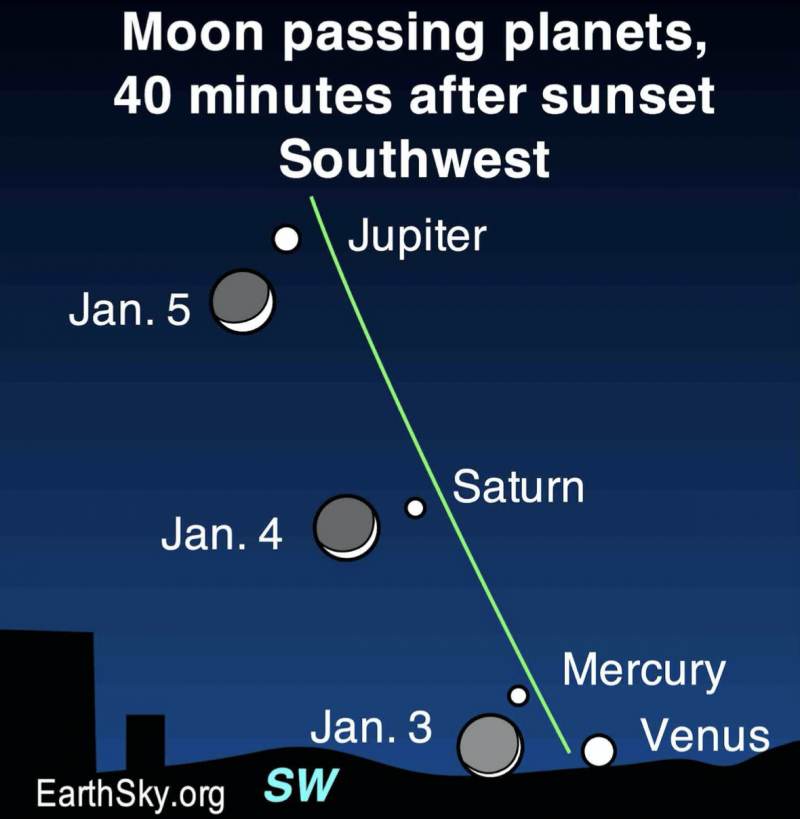
Evening of January three, iv and 5: Moon and planets later sunset. Following new moon on January 2, 2022, the immature moon – a waxing crescent – will return to the west after sunset. As seen from around the globe, the moon will laissez passer iv planets. Bright Venus volition exist exceedingly nearly the sunset glare … will you see information technology? Maybe. Try binoculars if you don't spot it. Mercury, too, will be difficult to see when the moon passes past on January 3. But on January iv and 5, if your heaven is articulate, you lot'll hands see the young moon near Saturn and Jupiter. Chart by John Jardine Goss.
EarthSky lunar calendars are dorsum in stock! We're guaranteed to sell out – get i while you can.
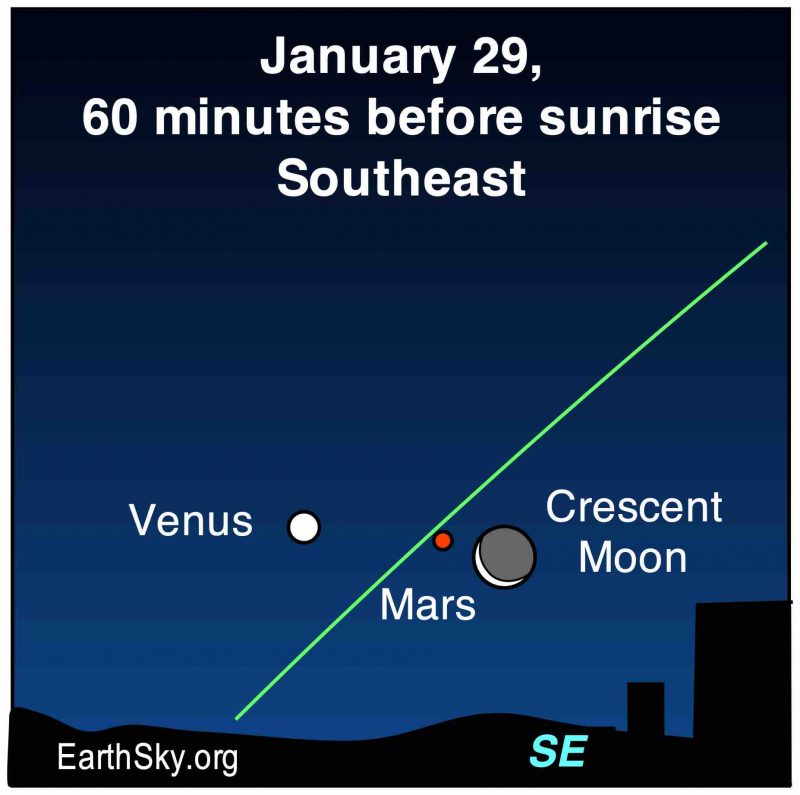
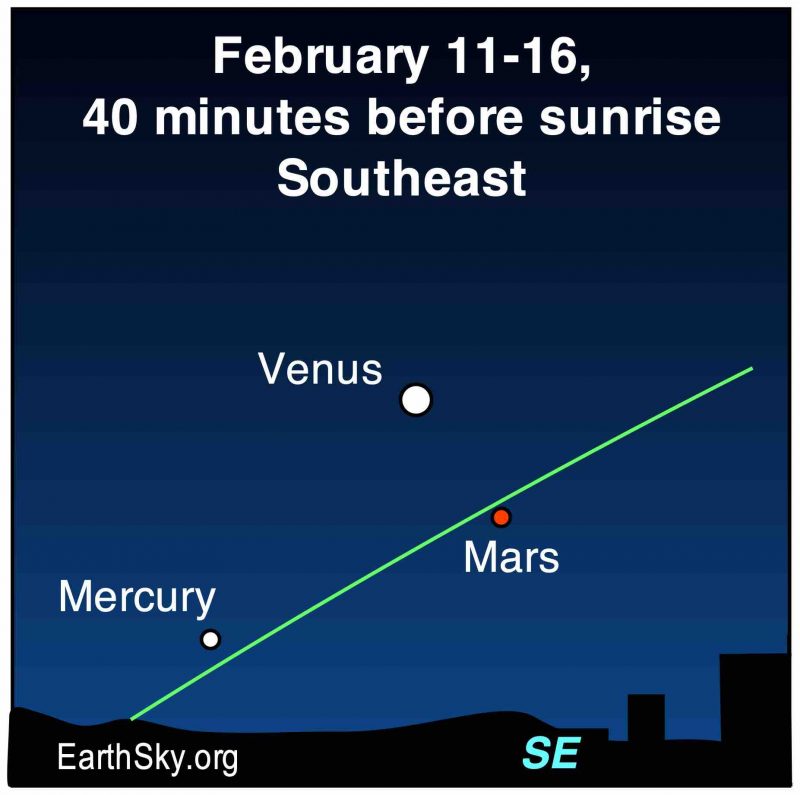
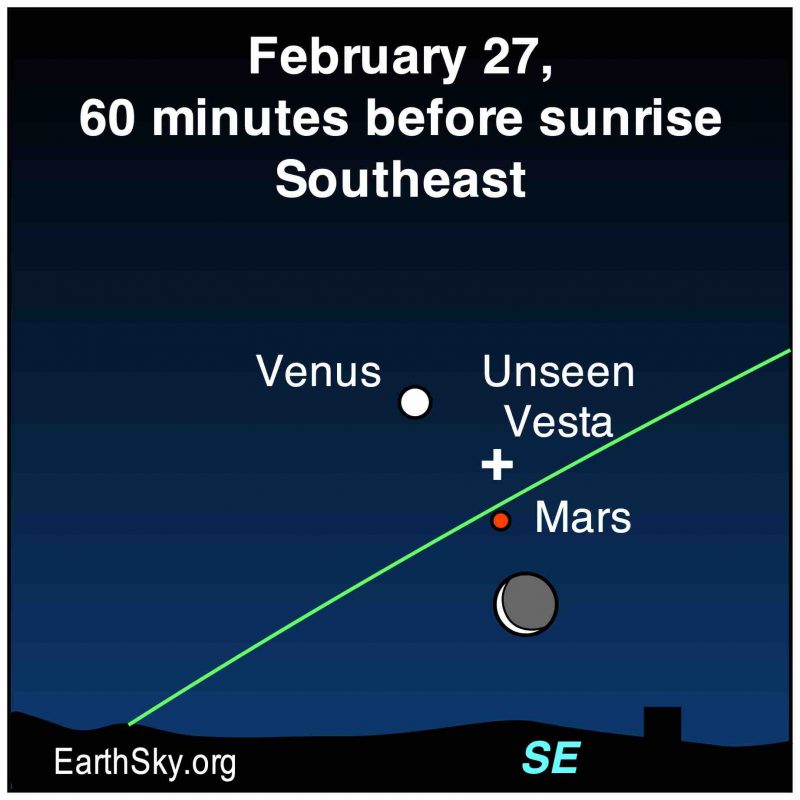
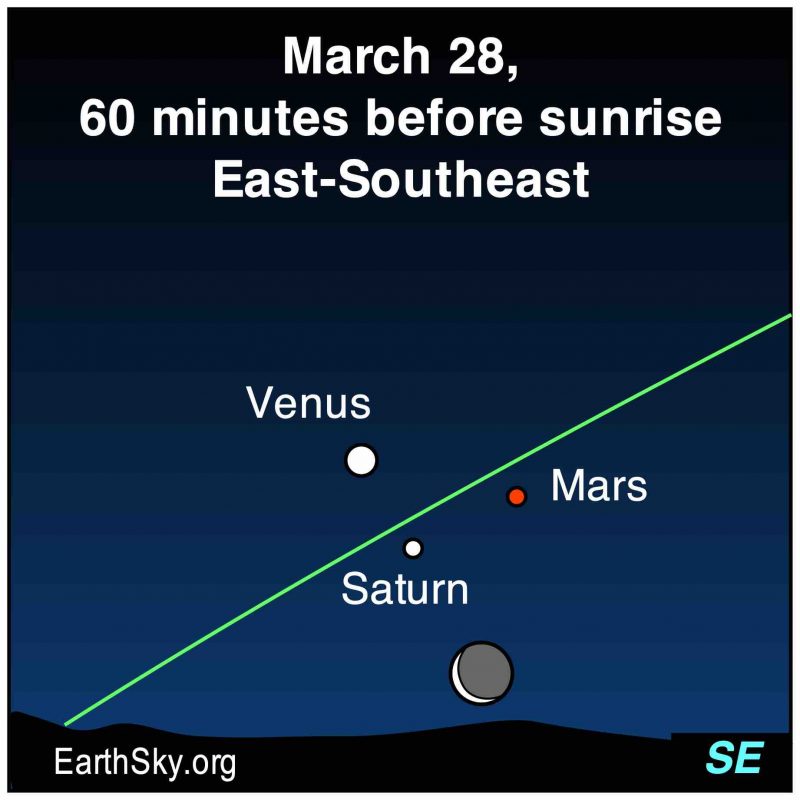
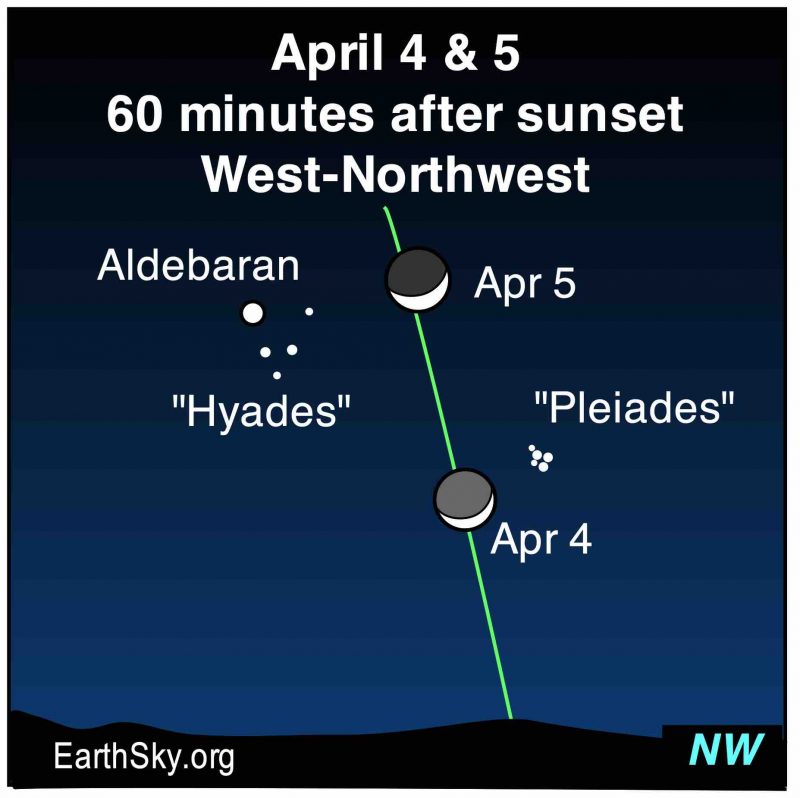
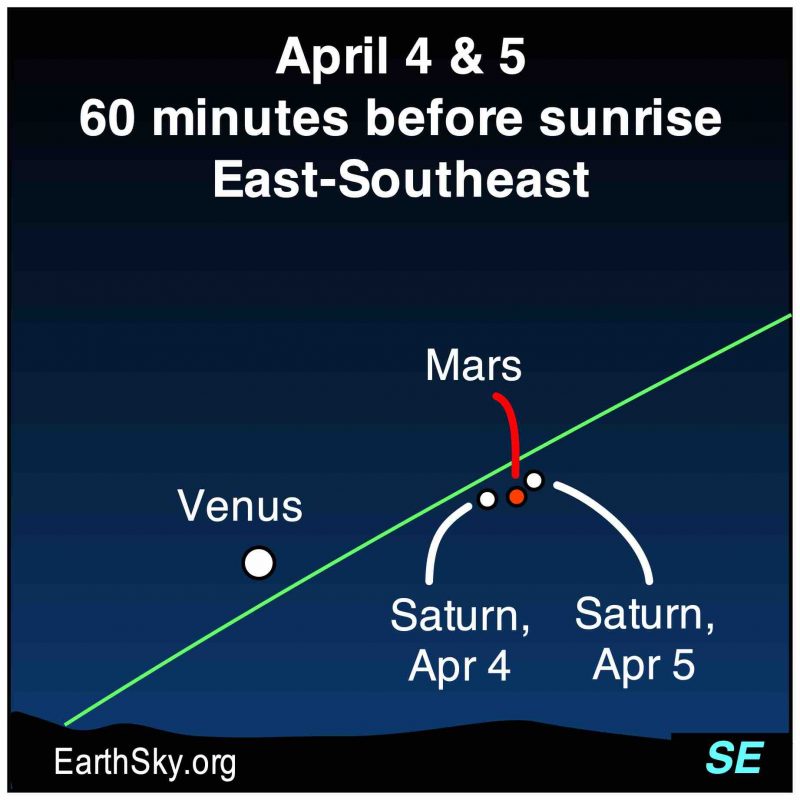
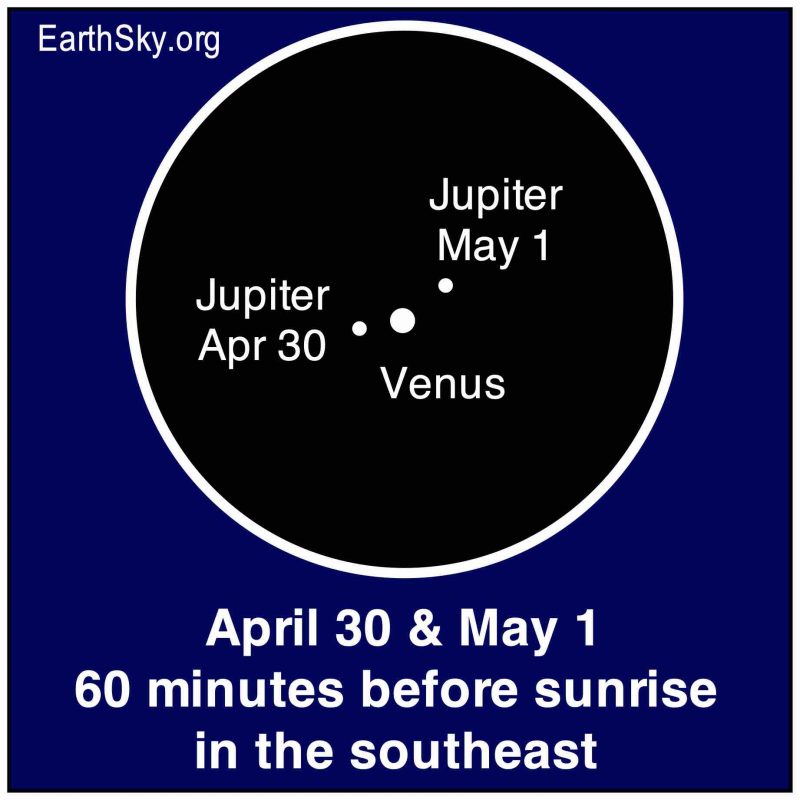
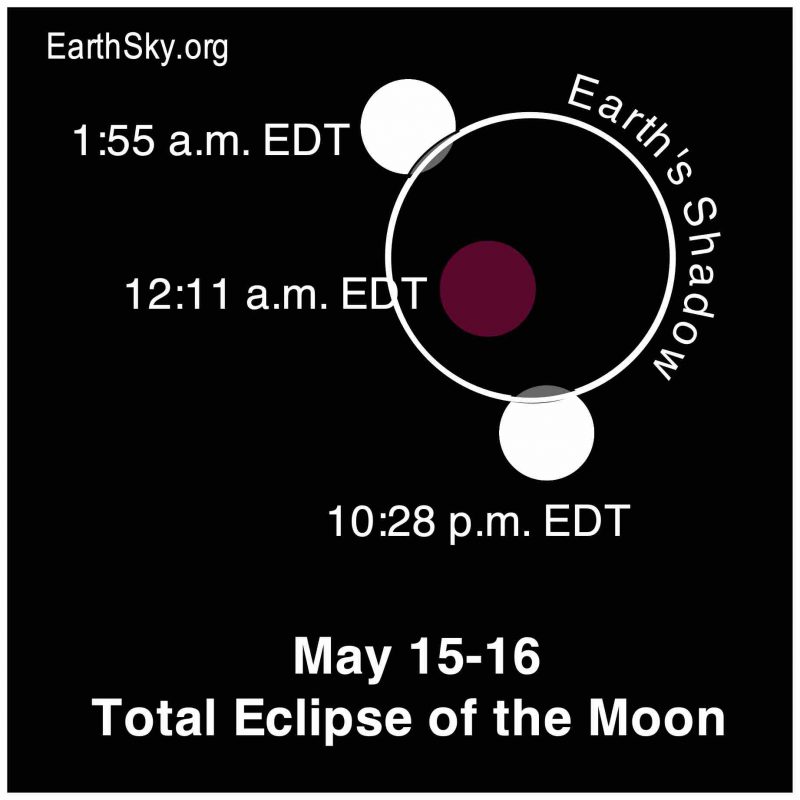
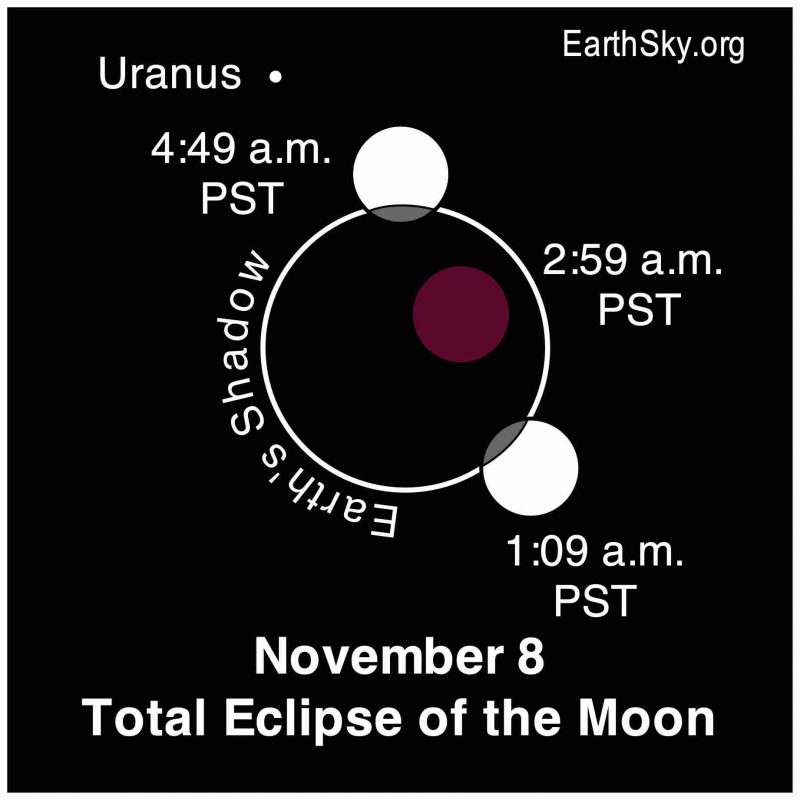
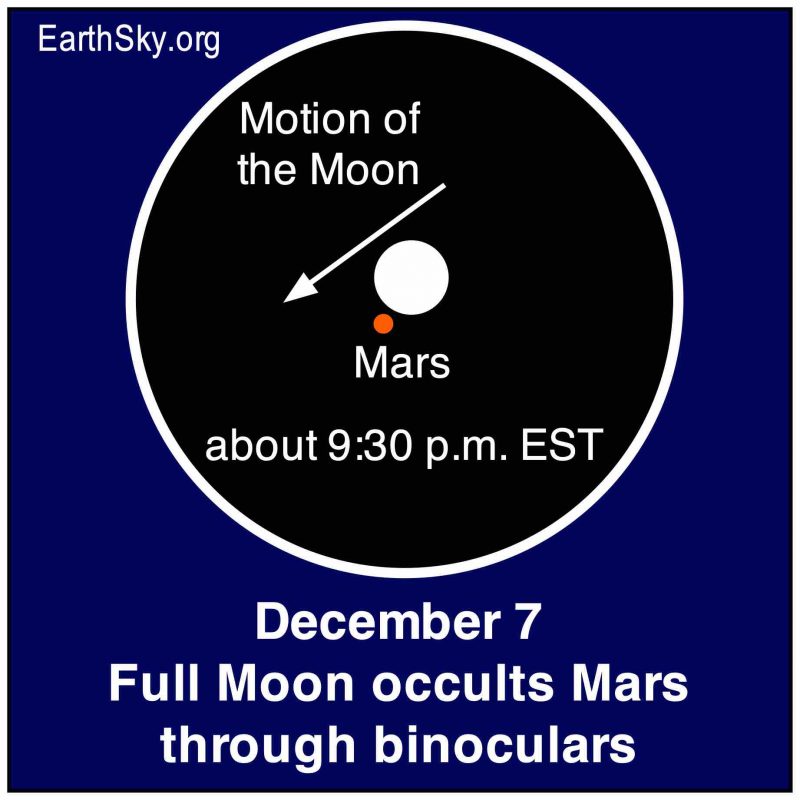
Morning of January 29: Crescent moon, faint Mars, brilliant Venus. The waning crescent moon volition form a line with faint Mars and bright Venus on the morning of Jan 29, 2022. When you see them, realize that Mars is far across the solar system from Earth, having passed behind the sun every bit seen from Earth on Oct eight, 2021. Read more about Mars. Meanwhile, Venus will exist nearly at its closest to World, having passed between us and the sun on January eight-9, 2022. Read more well-nigh Venus. Binocular users with dark skies will see a bonus feature, the subtle glow of the star-forming nebula M8, forming a triangle with the moon and Mars. Chart by John Jardine Goss.Mornings of February eleven to 16: Venus, Mars and Mercury. Encounter all 3 of the rocky worlds that are Earth'due south neighbors in the inner solar system on the mornings of February 11-16, 2022, shortly earlier sunrise. And, of course, wait directly down to encounter the 4th rocky planet, Earth! Nautical chart past John Jardine Goss.Morn of Feb 27: A celestial care for to start your day. The waning crescent moon forms a line with Mars and Venus sixty minutes before sunrise on February 27, 2022. Unseen to stargazers, the asteroid Vesta Iurks stealthfully nearby, positioned between Venus and Mars. Yous'll need binoculars or a pocket-sized telescope, abroad from city lights, to spot Vesta. Chart by John Jardine Goss.The concluding few mornings of March and commencement few of April. Discover Venus, Mars and Saturn grouped closely together lx minutes earlier sunrise. Venus hands volition exist the brightest of the trio. Saturn and Mars will be much dimmer. Venus volition pass closest to Saturn on March 28, 2022, with the waning crescent moon joining them on that date. Chart by John Jardine Goss.Evening of April iv (and July 23): A pretty, near magical celestial scene. The dipper-shaped Pleiades star cluster – or 7 Sisters – is a favorite among stargazers. And the V-shaped Hyades star cluster ranks highly too. Add to them the waxing crescent moon with earthshine for a very bonny celestial scene. Just such an issue happens on the evening of April 4 near an hr after dusk. This will happen again – this time in the morning time sky – an hour before sunrise on July 23 with Venus and Mars acting as bookends. Observe as well the brightest star of the grouping, brilliant Aldebaran, fiery Eye of the Bull in Taurus. Chart past John Jardine Goss.Mornings of April iv and 5: Mars and Saturn most merge. Another planetary meet up – or conjunction – occurs on April iv and five before sunrise. Mars and Saturn, with Saturn being the slightly brighter of the ii, announced together almost merging into a single point of light. Binoculars hands show the scene with the planets switching positions on the 2 mornings. Nautical chart past John Jardine Goss.Mornings of April thirty and May i: Jupiter and Venus nearly merge. Brilliant Jupiter climbs quickly in the morning twilight and heads toward brilliant Venus in the last week of April 2022. On the forenoon of Apr 27, the 2 planets are joined past the waxing moon for an middle-catching scene. Two mornings later, Jupiter and Venus will meet in conjunction, visually nearly bumping into each other. Because of the glare from both planets, many people volition come across them merge into one very bright glow! The morning of May one continues the evidence, simply with the positions of the planets reversed. Chart by John Jardine Goss.Overnight on May 15: Total eclipse of the moon. May's full moon also comes with a total eclipse for viewers in the Western Hemisphere. The western rim of the moon begins to enter the dark umbral shadow nigh 10:28 p.m. EDT. Watch the moon slowly slide into the umbra, becoming completely immersed at 11:29 p.m. EDT. The total eclipse continues until 12:54 a.m. EDT on May 16. By 1:55 a.m., the moon completely leaves the umbral shadow. Viewers in the Eastern portion of the US will be able to see the complete eclipse, while those in the west will encounter nearly of the eclipse with the moon rise eclipsed. Chart past John Jardine Goss.Morning of November 8: Total eclipse of the moon. Nearly half dozen months after the May 2022 eclipse, the moon again slides into Earth'south shadow, creating a total eclipse. Viewers tin can come across the eclipse best from the western U.S. Every bit a bonus, dim Uranus lies just two degrees east of the eclipsed moon. Nautical chart by John Jardine Goss.Overnight on December 7: The moon covers Mars. December 2022 is the best month for viewing Mars. It reaches its brightest signal every bit Earth passes it in its smaller orbit. On the overnight of Dec 7, the full moon slides past Mars, occulting (covering) the planet from portions of the U.Southward. The verbal time will depend on your location, but it'll exist a few hours later on sunset for parts of the The states. This fascinating and unusual result appears to skywatchers who are northwest of a diagonal line fatigued from Augusta, Maine, through Columbus, Ohio, through Little Rock, Arkansas and San Antonio, Texas, and thence extending into United mexican states. Begin viewing at 9:thirty p.m. EST to see the moon slowly approach Mars. Utilize binoculars to spot the ruby-red planet next to the bright total moon. Depending on the viewing location, it will have 30 seconds to over 6 minutes for the moon to completely occult, or cover, Mars. Chart past John Jardine Goss.
Bottom line: Best of 2022: Night sky scenes chosen for you by the editors of EarthSky that you won't want to miss. Mark your calendars now!
Also see the indispensable Observer'south Handbook, from the Regal Astronomical Lodge of Canada
Planet observing is easy: Top tips here
EarthSky's monthly planet guide
John Jardine Goss
View Articles
About the Author:
"I tin sometimes see the moon in the daytime" was a catholic revelation that John Jardine Goss first discovered through personal observations when he was 6 years old. It shook his young concept of the universe and launched his interest in astronomy and stargazing, a fascination he still holds today. John is past president of the Astronomical League, the largest U.Southward. federation of astronomical societies, with over 20,000 members. He's earned the title of Master Observer and has authored the celestial observing guides Exploring the Starry Realm and Carpe Lunam. John also writes a monthly stargazing column, Roanoke Skies, for the Roanoke Times, and a bimonthly column, Skywatch, for Blue Ridge Country magazine. He has contributed to Sky and Telescope mag, the IDA Nightscape, the Astronomical League'due south Reflector mag, and the RASC Observer'southward Handbook.
0 Response to "Will the Moon and Venus Meet Again"
Post a Comment